Showing posts with label philosophers. Show all posts

Monday, May 3, 2010

The Spirit of Hegel


The Master-slave dialectic is one of the central arguments of Hegel’s The Phenomenology of Spirit. A dense and difficult thesis, it aids understanding if one substitutes ‘individuals’ for the author’s somewhat perplexing usage of 'self-consciousnesses'. Looking at it from this perspective, then, the idea to hold on to is that each individual requires another to establish full self-awareness. What is required from the other is acknowledgement or recognition. The integrity of my self-consciousness (not, I stress, to be mistaken with 'embarrassment' in strict English usage) is threatened by the existence of another who refuses to acknowledge me as a person.

It is this mutual relationship that is complicated in the relationship between master and slave, a relationship of domination and dependence; it is the division, in other words, between the ruler and the ruled. In this relationship the master would seem to have everything: he has both the subservience of the slave and the fruits of his labour. But what of his need for acknowledgement? The master acknowledges the slave, true, but it is the acknowledgement only of a 'thing', not an independent consciousness. In this unequal relationship the master has failed to achieve the acknowledgement he requires. The slave, too, lacks adequate acknowledgment; but he transforms and shapes the external world by his labour. He achieves permanence in labour, not the merely temporary gratification of the master. In this process he becomes aware of his own consciousness; for he has created before him something meaningful and objective. In this he discovers the nature of his own mind.

His argument starts to become just a shade, just a shade, less abstruse as the Phenomenology starts to deal with real historical situations. There is a discussion of Stoicism, a philosophy that could embrace the master in the shape of Marcus Aurelius, on the one hand, and the slave in the shape of Epictetus, on the other. It is in Stoicism that the slave, who has achieved self-awareness in work, can achieve a more complete type of freedom in withdrawal from the immediate conditions of existence into deeper forms of consciousness. In other words, the Stoic in chains is free because the chains no longer matter to him.

The problem here is that thought, cut off from the real world, is ultimately barren of any real substance; so the spirit moves on, through successive stages of existence and experience. If you intend to read the Phenomenology, or are reading it, there are huge passages here that you could quite happily skip, though there is an interesting discussion of forms of society based on laissez-faire economics, where Hegel's critique comes very close to that of Karl Marx. Just remember that the central idea to keep hold of is that the mind or the spirit, if you prefer, is moving towards ever higher forms of consciousness, with freedom as the ultimate goal. The French Revolution, then, becomes the climax of history, the stage where the mind achieves a state of absolute freedom.

So, there you have it: history is simply the arena in which the spirit achieves full consciousness of itself. The whole thing is highly abstract, almost impossibly so. There were those like Marx who were to turn Hegel's wordy speculations in a much more historically concrete direction, in concepts like alienation and class-struggle.

What do I think? What can I say other than to offer you the following observations of a far greater thinker that dear old Georg;

If I were to say that the so-called philosophy of this fellow Hegel is a colossal piece of mystification which will yet provide posterity with an inexhaustible theme for laughter at our times, that it is a pseudo-philosophy paralyzing all mental powers, stifling all real thinking, and, by the most outrageous misuse of language, putting in its place the hollowest, most senseless, thoughtless, and, as is confirmed by its success, most stupefying verbiage, I should be quite right.

Further, if I were to say that this summus philosophus [...] scribbled nonsense quite unlike any mortal before him, so that whoever could read his most eulogized work, the so-called Phenomenology of the Mind, without feeling as if he were in a madhouse, would qualify as an inmate for Bedlam, I should be no less right. On the Basis of Morality


Stay clear of the madhouse!

Thursday, April 29, 2010

Locke and Liberty


John Locke's political theories began to alarm the English establishment at the time of the French Revolution, and prior to this during the American Revolution, though for a good bit of the eighteenth century he had, so to say, been 'tamed' and 'domesticated.' But as radical times demand radical ideas, so Locke was rescued from a wooly consensus and revivified as a champion of liberty.

In a debate in the House of Commons in 1776, John Wilkes recited from Two Treatises of Government, demanding 'fair and equal representation.' In the 1790s Thomas Erskine, a radical Scottish lawyer, drew on the Second Treatise in his arguments for universal manhood suffrage. Locke also underpinned some of the great political testaments of the day, including Joseph Priestly's Essay on the First Principles of Government and Richard Price's On the Nature of Civil Liberty. His thought was also reinterpreted in a crypto-socialist light, in such works as The Real Rights of Man by Thomas Spence and The Complaint of the Poor People of England by George Dyer.

Given all this it comes as no surprise that there was a conservative back-lash, which grew steadily in intensity. It really begins with Josiah Tucker's The Notions of Mr Locke and his Followers, extended and republished in the 1780s as the Treatise Concerning Civil Government. Like a dog in pursuit of a bone, dear old Josiah simply refused to let go, later publishing The Evil Consequences Arising from the Propagation of Mr Locke's Democratic Principles. Phew!

And so it went on. Edmund Burke himself makes no mention of Locke in his Reflections on the Revolution in France, though others made good his omission. Writing in 1798 William Jones described Locke as "...the oracle of those who began and conducted the American Revolution, which led to the French Revolution; which will lead (unless God and his mercy interfere) to the total overthrow of religion and government in this kingdom, perhaps the whole Christian world."

As the Counter-Enlightenment progressed Locke's portrait was taken down from the hall of his old college, Christ Church in Oxford, from whence he had been expelled by order of Charles II in 1684. The Monthly Repository, a dissenting journal, lamented that this was "Locke's second expulsion from Oxford."

Tuesday, April 13, 2010

Heidegger and the Nazis


Martin Heidegger, author of Being and Time along with other philosophical works, was deeply compromised by his associations with the Nazis, particularly when he was elevated to the rectorship of Freiburg University, not the most successful period of his career. After the war he wrote The Rectorate 1933-34: Facts and Thoughts, his personal memoir of the period, a work of self-justification, which disguises as much as it reveals.

His rectorship at Freiburg collapsed for of a variety of reasons, including good old-fashioned departmental politics, vicious and treacherous as always, no matter what regime they operate under! Beyond that, one has to take into consideration Heidegger's own political naïveté and his gross over-estimation of his importance, both in the Nazi academic world and the broader scheme of things. One also has to take into account the nature of the Nazi system itself, and its underlying theory and practice. No matter what stress was placed upon the sublime, Nazism was shaped by mediocrity, not excellence. It was the world not of the Superman, but the Supermouse.

In his memoir, Heidegger maintains that his position at Freiburg was undermined by a conspiracy, involving his academic rivals and the district student leader, Dr Gustav Scheel, who later became Reich leader of students and university lecturers, and Gauleiter of Salzburg. Heidegger certainly had opponents at Freiburg, especially in the Law Faculty, though not all were doctrinaire Nazis. The matter, though, went far beyond the confines of the University.

In November 1933 the Nazis created their own structure of leadership within the whole university system, elevating Party mediocrities and time-servers to important positions in the Reich Association of German Universities. It was a clear declaration that Heidegger's bid for leadership of the German university system had failed, and that the Nazis had no real use for him, no matter his international stature. Abandoned by many of his more important colleagues at Freiburg, and snubbed by the government, Heidegger was in a personal, professional and political limbo.

There were also those in the Nazi movement, led by Erich Jaensch, his former colleague at the University of Marburg, who made every attempt to ensure that Heidegger would not be offered a leading position in Prussia or the Reich, because they did not wish him to be seen as 'the philosopher of National Socialism.' Jaensch compiled a memorandum arguing against a proposal that Heidegger be appointed head of the Prussian Academy of University Lecturers. It would be against all reason, he wrote;

...if what is possibly the most important post in the intellectual life of the nation in the weeks and months ahead were to be filled by one of the biggest scatterbrains and most eccentric cranks we have in our university system: a man about whom men who are perfectly rational, intelligent and loyal to the new state argue among themselves as to which side of the dividing line between sanity and mental illness he is on.

And this on one of the best philosophical minds Germany produced in the whole of the twentieth century! Against this background it is no great surprise that his rectorship failed. He finally resigned in April 1934, not February, as he says in Facts and Thoughts.

Tuesday, January 26, 2010

Hegel and History


I think the Hegelian system, the philosophy propounded by Georg Friedrich Hegel, is positively malign. Why? Well, here we go!

I will try to make this as simple as I can without, I hope, losing sight the intellectual dynamics involved, not easy, I assure you! Hegel perceives history as a quest for self-realisation, a move from the less complete to the more complete forms of an existence; of an unfolding of freedom.

The evolution of the Idea in history was akin to the voyage of Odysseus, an analogy that he uses himself. His dialectic is one where the human spirit first become alienated from itself, and then through a growing awareness of the forms of alienation becomes capable freeing its potential and achieving liberation through self-awareness. Paradise Lost is Paradise Regained. History, in other words, was a tragedy with a happy ending.

In practical terms this means that the individual life, the individual destiny, if you like, is meaningful only insofar as it gives shape and purpose to the Spirit moving through history. Napoleon made use of the moment to create his own fate but history made use of him by the 'cunning of reason' to shape events to its own purpose and ends. His actions brought freedom to Prussia and Germany from the old forms of historical identity, and even his downfall did not bring the downfall of freedom. Napoleon lived; the Spirit moved; the world has been permanently changed.

As the Spirit continually moves forward to higher forms of expression, it breaks free from all encumbering institutions. As Hegel expresses it, this is the 'negation of all that is.' In Hegel's system of things the relation between Spirit and matter is likened to the relationship between slave and master. It is the process of emancipation, in other words, that gives shape to the history of the world. In the Philosophy of History he expresses it thus, "The History of the World is none other than the progress of the consciousness of freedom...the Eastern nations know only that one is free; the Greek and Roman world only that some are free, while we know that all men absolutely (man to man) are free."

So, each new revelation destroyed the world to which it came. The Spirit, at war with itself, as truth gave way to truth; at war with matter and the institutions in which truth had been enslaved. The Spirit in seeking objective realisation of itself is always moving beyond. For a Roman to hold on to Paganism and resist the advance of Christianity was effectively to embrace the dead, a shell without habitation.

For Hegel history "aims at the conviction that what was intended by eternal wisdom was actually accomplished." There is no failure in history, for "God governs the world: the actual working of his government-the carrying out of his plan is the history of the world." All has its purpose and there is nothing to regret-even injustice has its place. Conflict was resolved by transition to a higher phase of being, no matter how many victims are left along the way. For, after all, "the particular is for the most part, of too trifling value compared with the general for which individuals are sacrificed and abandoned."

There you have it, and I am sure you can detect the elements that would lead to Marxism and other historical absolutes - to teleologies of all kinds, of the left or of the right. It's seductive, it's persuasive, it's comprehensive and it’s monstrous.

Sunday, December 13, 2009

Ecce Homo


There are many thinkers and writers that I admire, people who in same fashion or other have made some worthwhile contribution to our common culture, to the culture of humanity. There are also many that I detest, and I make no apologies for using so strong a word, those whose thought and words have had what I consider to be a baleful influence on history.

My attitudes can be quite complex. I can admire the sheer intellectual industry of someone like Karl Marx, while rejecting the political philosophy that arises, dangerously comprehensive, dangerously Victorian in its all-consuming arrogance. But the one figure that I despise more than any other, who, so far as I am concerned, has no redeeming features as a writer or as a man, is Jean-Jacques Rousseau.

First, ecce homo: consider the man, consider the hypocrite. In the mid-1740s he began a relationship in Paris with one Thérèse Levasseur, the details of which ore outlined in Confessions, his autobiography. By this woman he was to have a son and as many as four other children whose names and sexes are not even recorded. One by one Thérèse was persuaded to give these children away to foundling hospitals, places where the mortality rate was even higher than the average for the day.

There is no certain evidence but on the balance of probability all of Rousseau’s children died in these places. He later made one attempt to discover the whereabouts of his son, some ten years after his birth, but no record of his existence could even be found. Edmund Burke was later to write of his conduct:

…his heart was incapable of harbouring one spark of common parental affection. Benevolence to the whole species, and want of feeling for every individual with whom the professors come in contact, form the character of the new philosophy. Setting up for an unsocial independence, this their hero of vanity refuses the just price of common labour, as well as the tribute which opulence owes to genius, and which, when paid, honours the giver and the receiver; and then he pleads his beggary as an excuse for his crimes. He melts with tenderness for those only who touch him by the remotest relation, and then, without one natural pang, casts away, as a sort of offal and excrement, the spawn of his disgustful amours, and sends his children to the hospital of foundlings. The bear loves, licks, and forms her young; but bears are not philosophers. Vanity, however, finds its account in reversing the train of our natural feelings. Thousands admire the sentimental writer; the affectionate father is hardly known in his parish.

Yes, this is the key not just to the man-who was later to lecture women on the best means of child rearing-but the forms of thought he produced, the substitution of arid formulas for genuine feeling and real life. Denis Diderot, another apostle of the Enlightenment, was later to describe Rousseau as “…false, vain as Satan, ungrateful, cruel, hypocritical and wicked.”

Oh, but how he loved in the abstract, how he eulogised the species in his Discourse on Equality and The Social Contract. In these we have people, men, to use his own expression, more as antique Romans than modern Europeans; men who are offered as expressions of ‘virtue’, as gestures of virtue, if you prefer, who may very well have escaped from the paintings of Jacques-Louis David. What is to be done?, Rousseau asks at the conclusion of The Social Contract. Cultivate virtue, the answer comes, a new contract where the individual will find freedom in submitting to the ‘general will.’ Yes, here is the shadow of Robespierre; here is the manifesto of the cold-blooded fanatic, here is the Republic of Virtue; here is the guillotine and the Terror, here is the abstraction coming like a vampire to suck life dry.

Edmund Burke was brilliant in his prescience. As early as 1790, when his Reflections on the Revolution in France was published, he could see the course of events, he could see contemporary moderation turning to destruction and dictatorship. The excesses of the Revolution were no accident. They were built in, rather, from the outset, rooted in Rousseau’s personal vanity, arrogance and general moral failings. They were rooted, I would add, in his failures as a human being coupled with a seductive intellectual power, enough to seduce the likes of Robespierre, Saint-Just, Marat, Desmoulins and all the other ogres of 1789. Rousseau was their spiritual father, just as he stands as the spiritual father to all of the tyrannies that followed. Rather apt for a man who had not the courage to be a real father.


Wednesday, November 18, 2009

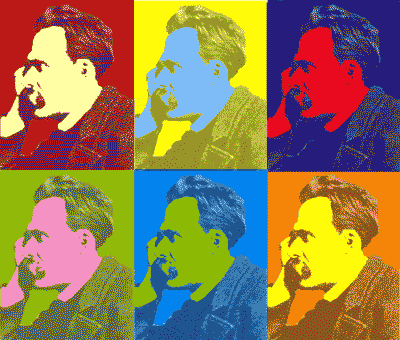
Beyond Good and Evil-My Favourite Nietzsche Quotes


Here are some of the best:

1. Although the most acute judges of the witches and even the witches themselves, were convinced of the guilt of witchery, the guilt nevertheless was non-existent. It is thus with all guilt.

2. And if you gaze for long into an abyss, the abyss gazes also into you.

3. Egoism is the very essence of a noble soul.

4. Faith: not wanting to know what is true.

5. Fear is the mother of morality.

6. I would believe only in a God that knows how to Dance

7. In heaven, all the interesting people are missing

8. Is life not a thousand times too short for us to bore ourselves?

9. Morality is the herd-instinct in the individual.

10. Stupid as a man, say the women: cowardly as a woman, say the men. Stupidity in a woman is unwomanly.

11. That which does not kill us makes us stronger.

12. The Christian resolution to find the world ugly and bad has made the world ugly and bad.

13. The individual has always had to struggle to keep from being overwhelmed by the tribe. If you try it, you will be lonely often, and sometimes frightened. But no price is too high to pay for the privilege of owning yourself.

14. The world itself is the will to power - and nothing besides! And you yourself are the will to power - and nothing besides!

15. Whatever is done for love always occurs beyond good and evil.

And what is the best of all? Why, it has to be this:

There cannot be a God because if there were one, I could not believe that I was not He. :-))